The Human Side of Technology
I've spent years trying to explain how technology changes people. This is the post where I try to explain why that felt worth doing — and why it feels more urgent now than when I started.
There is a version of journalism and storytelling that is mostly information delivery. Facts, summaries, updates. I never found that version very interesting.
What I kept wanting, in articles, podcasts, and conversations with engineers, scientists, and researchers, was something with more weight to it, more perspectives. Stories grounded in real expertise, real evidence, and real consequence (and hopefully supported by data and context). The kind of conversation where you leave understanding something you did not before, or where a question you thought was settled suddenly opens up again.
Education, facts, science that can be examined and scrutinized, and stories. That has always been my “this is the way.”
A while ago, I found myself thinking again about a piece I wrote years earlier, as editor of a technology magazine, about physics students from Instituto Superior Técnico.
One of the people I interviewed was Nuno Loureiro, who would later become director of MIT’s Plasma Science and Fusion Center (he came to mind recently given the barbaric way he was killed in Boston this year). The piece I wrote back in 2018 was full of remarkable people. Some went on to lead institutions like Imperial College London, others organisations like the Bill & Melinda Gates Foundation. But what I remember most from those conversations was not the career trajectories. It was the atmosphere underneath the science. Behind the equations and technical language there was always something deeply human. Ambition. Curiosity. Discipline. Doubt. The desire to understand reality a little better than before. It was hard not to be inspired by it (easy to tell I love this type of work, right?).
For years, I thought I was mostly covering technology, science, startups, AI, the Internet, and digital culture. But in the back of my mind I was always trying to understand something else: how human beings adapt, or struggle to adapt, to rapid technological change.
That question kept appearing in different forms.
I saw it in conversations about social media and the way algorithmic systems slowly reshape attention, incentives, and public behaviour. I did research in partnership with universities and Chartbeat on elections in Portugal, and the data showed something striking: every time the populist candidate was criticised or mentioned by other candidates, those were the posts with the most views. The algorithm was not neutral. Its incentives shaped visibility and attention.
I also got to ask Reed Hastings directly about attention and algorithms during a Netflix press event in Rome. Different context, same underlying question.
I saw it in discussions about journalism and the weakening of the economic foundations that supported serious reporting for decades. And in interviews about Universal Basic Income and automation, where the real question was never only economic, but psychological:
what happens to people when work, structure, meaning, and contribution begin to change?
And I increasingly see it in AI.
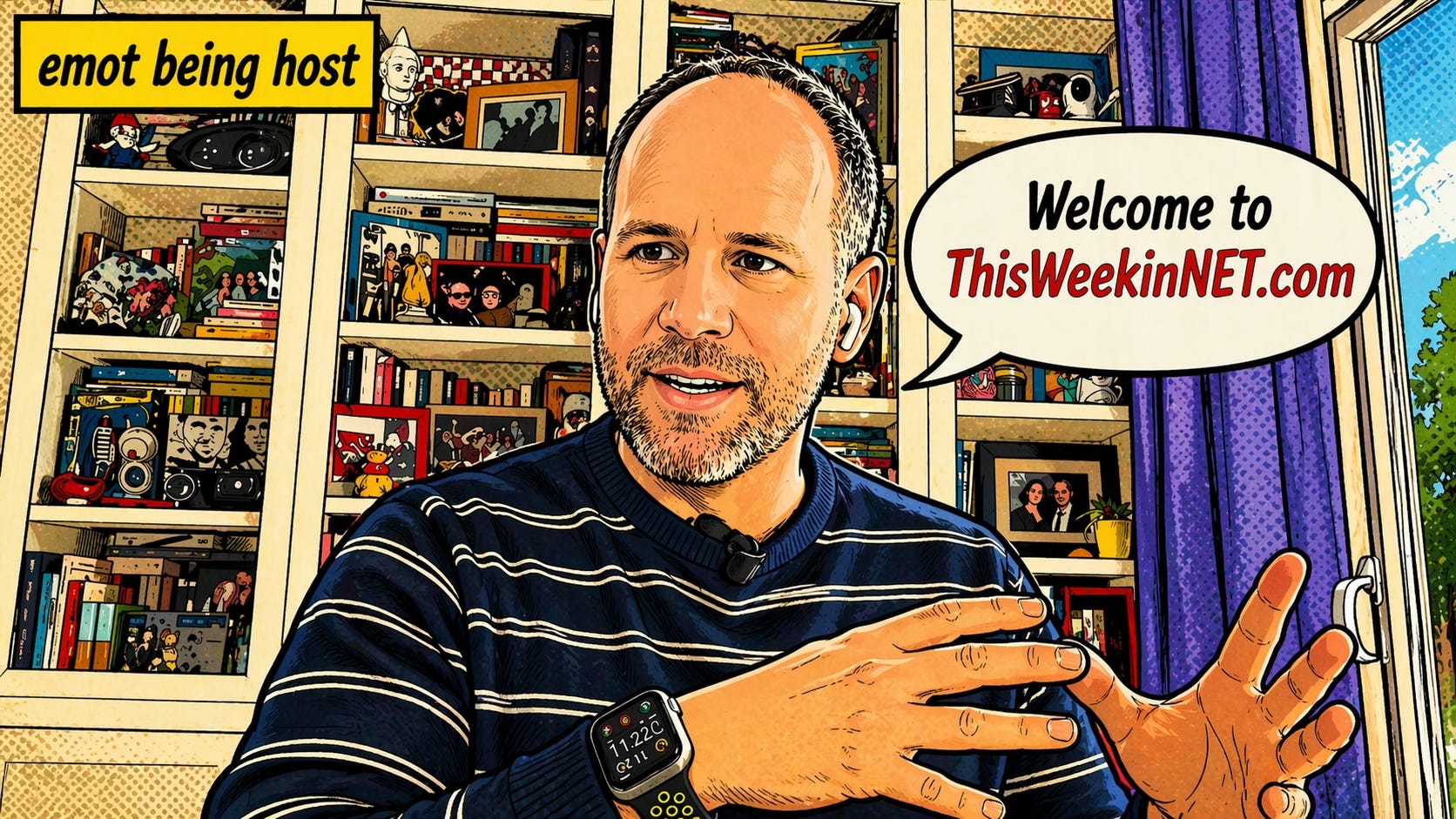
Over the last few years, while working directly with Cloudflare’s engineering, emerging technologies, and research teams, and hosting This Week in NET (built the site this year on my own with AI help), I spent a lot of time speaking with engineers, researchers, founders, and infrastructure specialists about AI, cybersecurity, Internet infrastructure, software development, post-quantum cryptography, and the changing architecture of the Internet itself.
The technical side mattered, of course. But what kept coming back were the human questions underneath it. Talking with deeply technical people about how the Internet evolved (protocols, hardware, etc), you realize how often very human flaws, incentives, compromises, and quirks shaped what the Internet, cloud computing, and now AI became.
One recent conversation I had is a good example of those tensions. The guest was Albert Pedersen, a young security engineer from Denmark who started (at 16!) finding serious vulnerabilities as a teenager through bug bounty programs before eventually joining Cloudflare.
We talked for hours, though only part of that conversation made it into the show (the episode was supposed to come out this month, but recent work news stopped it from airing). The conversation was relevant not only for what it covered about AI and security, but for something deeper underneath: what happens when people stop fully understanding the systems they are building.
Albert described how AI already helps engineers review code, understand large systems, and discover vulnerabilities. But he kept returning to a different concern. Teams shipping systems they no longer fully understand. Developers relying too heavily on generated code. Organisations producing more software, more quickly, without increasing human understanding alongside it.
At one point he said something simple that stayed with me and is also topic of quite interesting current analysis and some studies:
“Your brain is a muscle. If you stop using it, it weakens.”
You could feel that same tension everywhere. Many folks were no longer only asking “What can this technology do?” but also “What happens to me now?” Engineers wondering how much of their work will change. Writers and artists questioning where human creativity fits when language and images become cheap to generate. Companies trying to use AI productively without breaking trust, culture, or judgment. Ordinary users trying to understand what is real in a world increasingly filled with synthetic media, algorithmic feeds, and AI-generated noise.
Technology evolves quickly. Human beings do not.
We build things faster than we understand what they do to us.
And that is one reason why good science and technology communication matters so much right now.
Not as marketing. Not as hype. Not as “content.”
But as a form of orientation. Strategy. Guidance.
We live in a moment where social media algorithms reward speed, emotion, certainty, and simplification. At the same time, AI makes it easier than ever to produce convincing noise, shallow summaries, and synthetic content that looks like knowledge but often is not.
That makes thoughtful conversations, well-investigated reporting, scientific literacy, and real expertise more important, not less. It also makes it more important that rigorous thinking reaches people who would never read an academic paper or technical study on their own, that the distance between specialists and everyone else gets bridged rather than filled by algorithms, simplification, and noise.
We need spaces where difficult ideas can be discussed carefully. We need researchers, engineers, journalists, and communicators who can explain complex things clearly without flattening them into slogans. People capable of connecting technical change to human consequence.
Because the most important technological shifts stop being only technical very quickly.
They become social shifts. Psychological shifts. Cultural shifts. Economic shifts. Human shifts.
That is what kept drawing me toward certain stories over the years. Not only the innovation itself, but the way people live through it.
The more I look back, the more I think that was always the real subject.
Not technology alone. But the human side of technology.
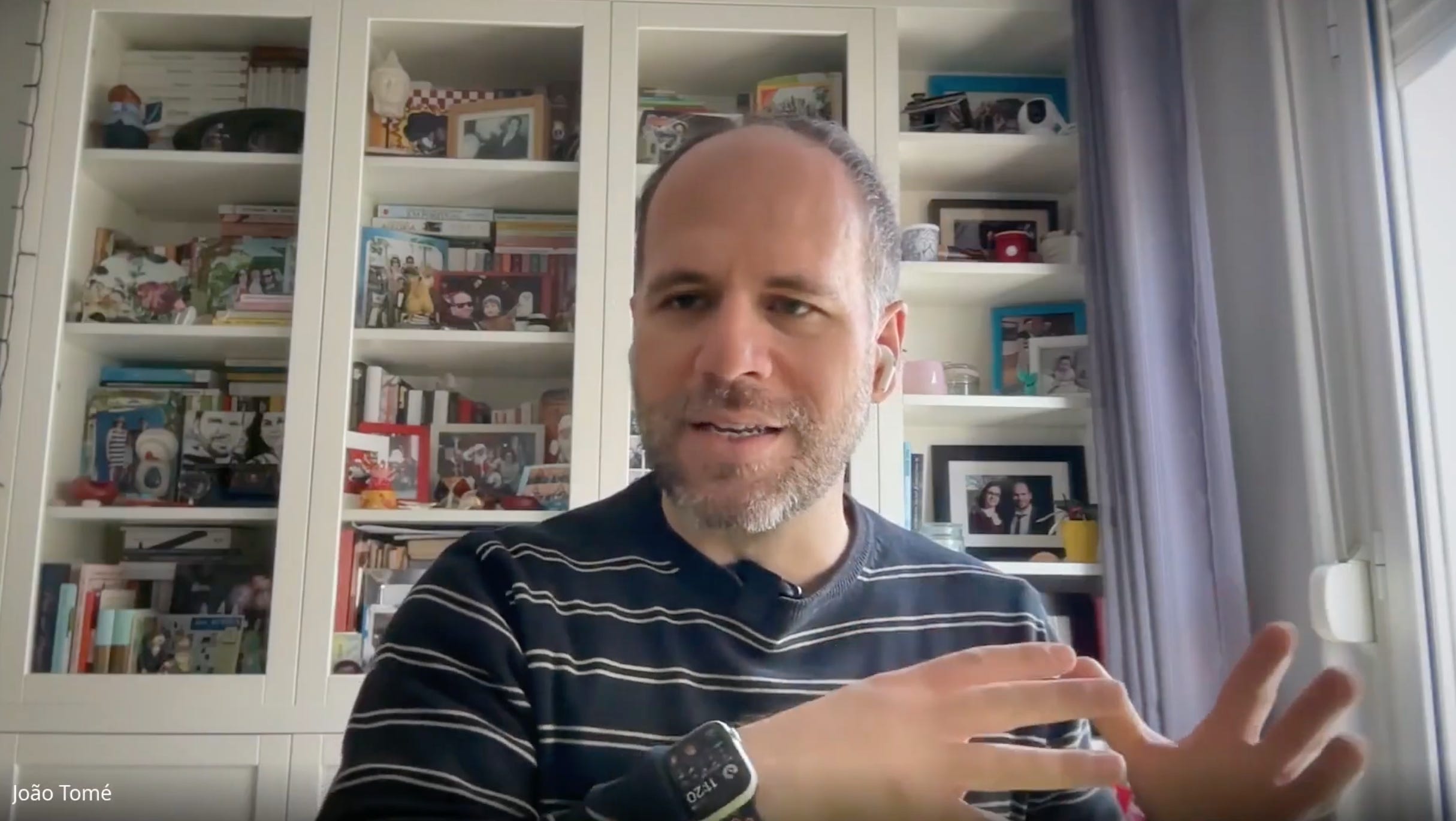
(The next photo is the real version of that comic-style AI photo. It was actually recorded with Ignat Korchagin talking about how he contributed to Cloudflare’s history, not for This Week in NET (where I usually used better lighting and background). He left Cloudflare in March after 8 years building and improving the kernel operating system used in servers and hardware around the world.)